


Who am i
The Artist Behind the Brand
Exclusive Edition
Founded in 2020 by graphic designer Grégory Delaunois (“Bandito”), Exclusive Edition is a creative studio dedicated to motor racing. Its mission is to celebrate iconic racing teams, drivers, and legendary motorsport moments through high-end, limited-edition art posters. Each piece is printed on premium-quality paper using eco-friendly inks to ensure exceptional visual results.
I hope I have kept my child’s soul
Grégory DELAUNOIS, alias “BANDITO”, is a passionate graphic designer who graduated from the Ecole Supérieure des Arts (Beaux-Arts) in Tournai in 1992. Over his career, he has worked as an advertising designer, web designer, animator, and art director, while teaching interactive design at his former school for 25 years.
After co-founding several communication agencies, the Covid-19 pandemic prompted him to merge his 25 years of expertise with his passion for cars. Today, he creates unique original posters celebrating motor racing for enthusiasts worldwide, all while continuing to share his know-how through teaching.

My Process
From the Shelf to the Wall: How Each Poster Is Made

No pencil ever touches these cars. The real tools are a scale model, a camera, and patience.
People often assume these posters start life as a sketch — a hand moving across paper, chasing the line of a fender until it feels right. It’s a fair assumption; the finished pieces have that quality, the economy of a good drawing. But that’s not how any of this begins. It starts smaller, and stranger: with a die-cast model, a fraction of the size of the real thing, standing on a desk under a lamp.
The Model Comes First
Every poster in this collection begins with a scale replica of the actual car — the same proportions, the same livery, shrunk down to something that fits in one hand. I turn it slowly under different lights, watching how a reflection travels across a wheel arch, how a shadow pools differently depending on the angle. A car that took engineers years to shape can still surprise you at one-eighteenth scale, if you’re patient enough to look properly.

The Camera Does the Looking
Once a model earns its place, the camera comes out — sometimes for an hour, sometimes for an entire afternoon. I’m not chasing a single perfect shot so much as a conversation: dozens of frames, each one asking the same question from a slightly different angle. Which perspective makes this car feel like it’s actually moving? Which one flattens it into something lifeless? Most frames get discarded. The one that survives usually isn’t the most technically correct — it’s the one that feels most like the car’s own personality, caught for a fraction of a second.
Photoshop Is Where the Story Gets Built
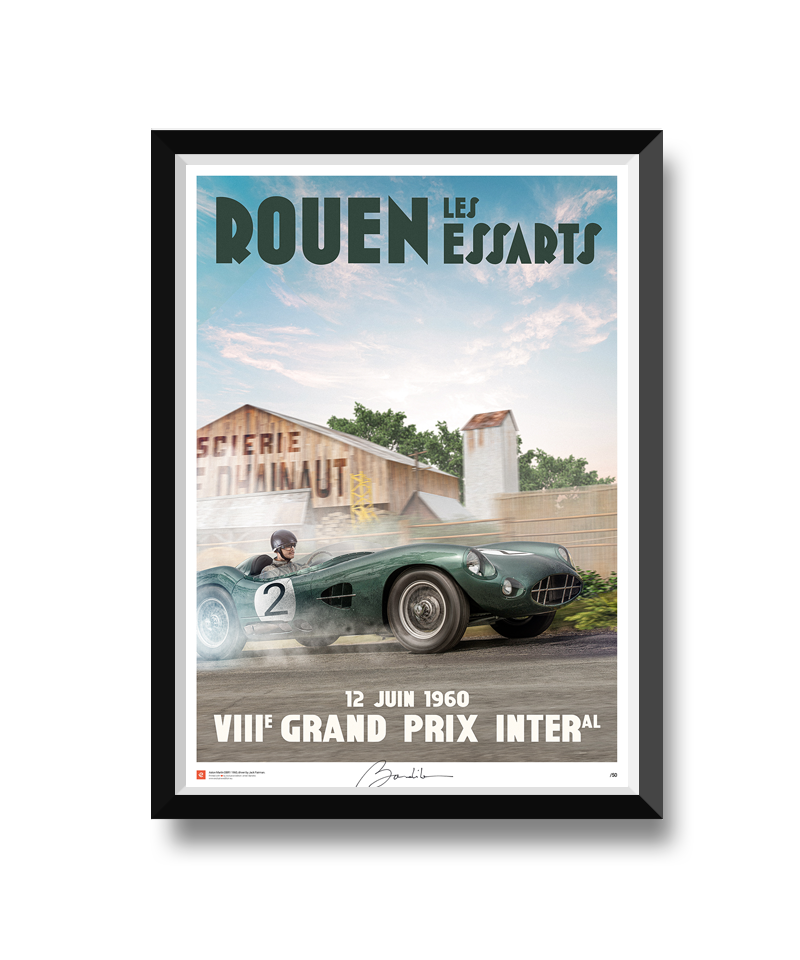
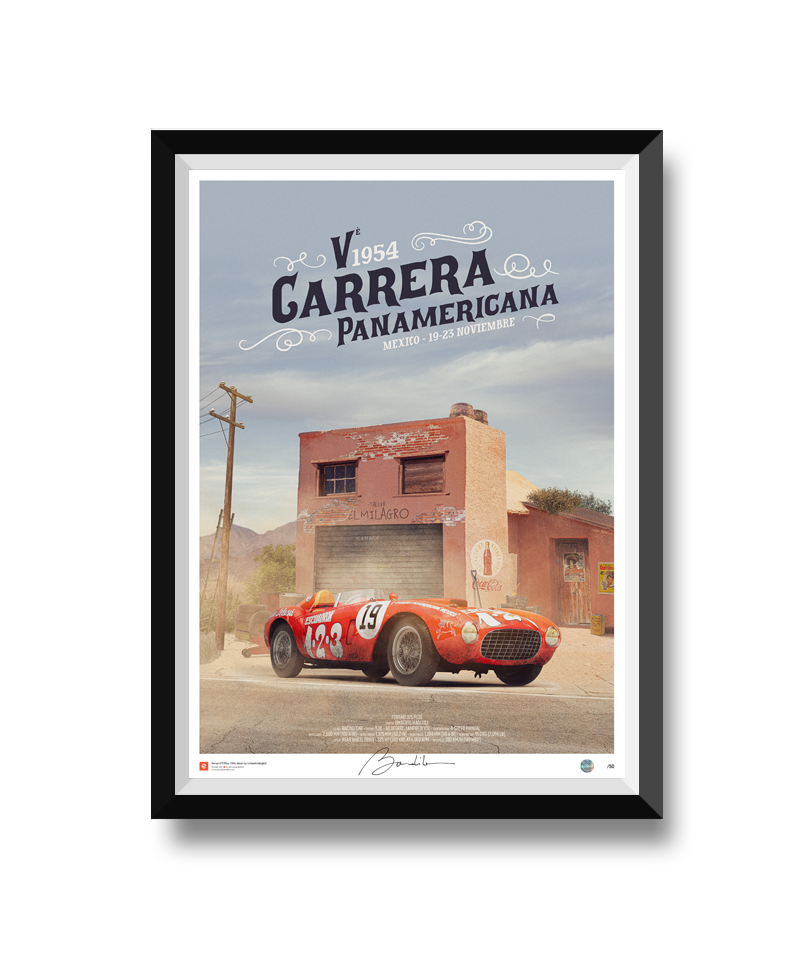
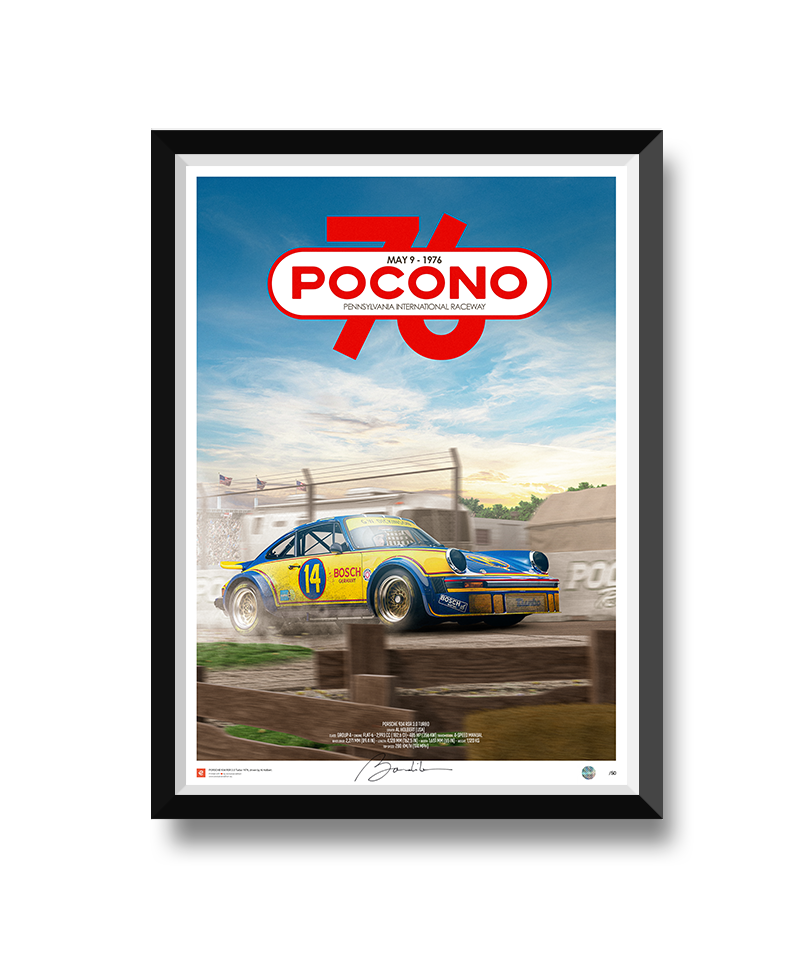
The photograph is only ever the starting point. From there, everything happens in Photoshop, layer by layer — the background built from scratch, the light adjusted until it matches the mood of the story I’m trying to tell, the composition stripped back until only what matters remains on the page. This is where a photograph of a model on a desk slowly turns into a poster of a Porsche cresting Pikes Peak, or a Renault sliding sideways through a Monte-Carlo hairpin. None of it is generated. Every pixel has been placed there deliberately, built around a real photograph of a real, physical object.

Why Work This Way
I could work from reference photos of the full-size cars alone, or lean entirely on digital rendering software the way some studios do. I don’t, because something gets lost in that shortcut — a certain physicality, the honest imperfection of light hitting an actual object rather than a simulation of one. Photographing a model forces a kind of discipline that a screen alone doesn’t: you have to solve problems with your hands, move a lamp six inches to the left, tilt the car until the reflection stops lying to you. That discipline ends up in the final piece, even if most people who see the poster could never quite say why it feels the way it does.
What Doesn’t Change
The history always comes first. Before I photograph anything, I research the car, the race, the driver, the year — because a poster that gets the details wrong isn’t art, it’s just decoration. Once the story is right, the model comes out, the camera comes out, and the slow work of building an image begins. It’s not the fastest way to make a poster. It’s the only way I’ve found that lets a small object on a desk carry the full weight of the real thing it’s standing in for.
FINAL result
Limited Edition Automotive Art
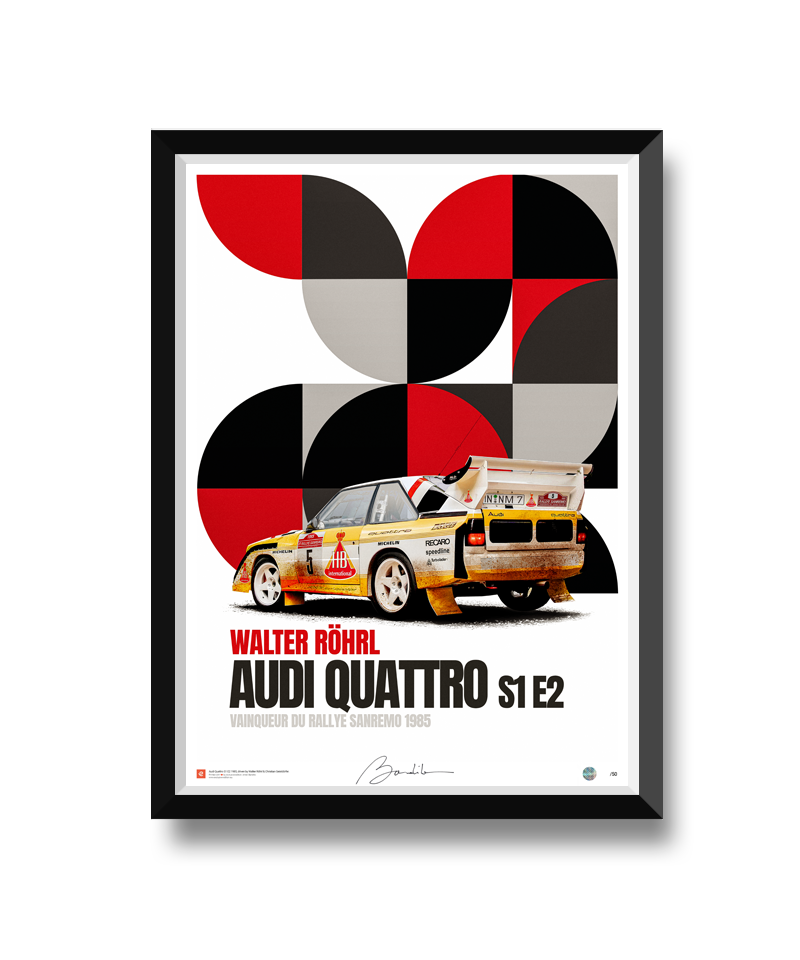
Each artwork celebrates an iconic model or legendary moment in motorsport through a strictly limited and numbered run.
Printed on premium fine art paper with eco-friendly inks, these timeless posters are designed to adorn your walls and capture your passion for racing.